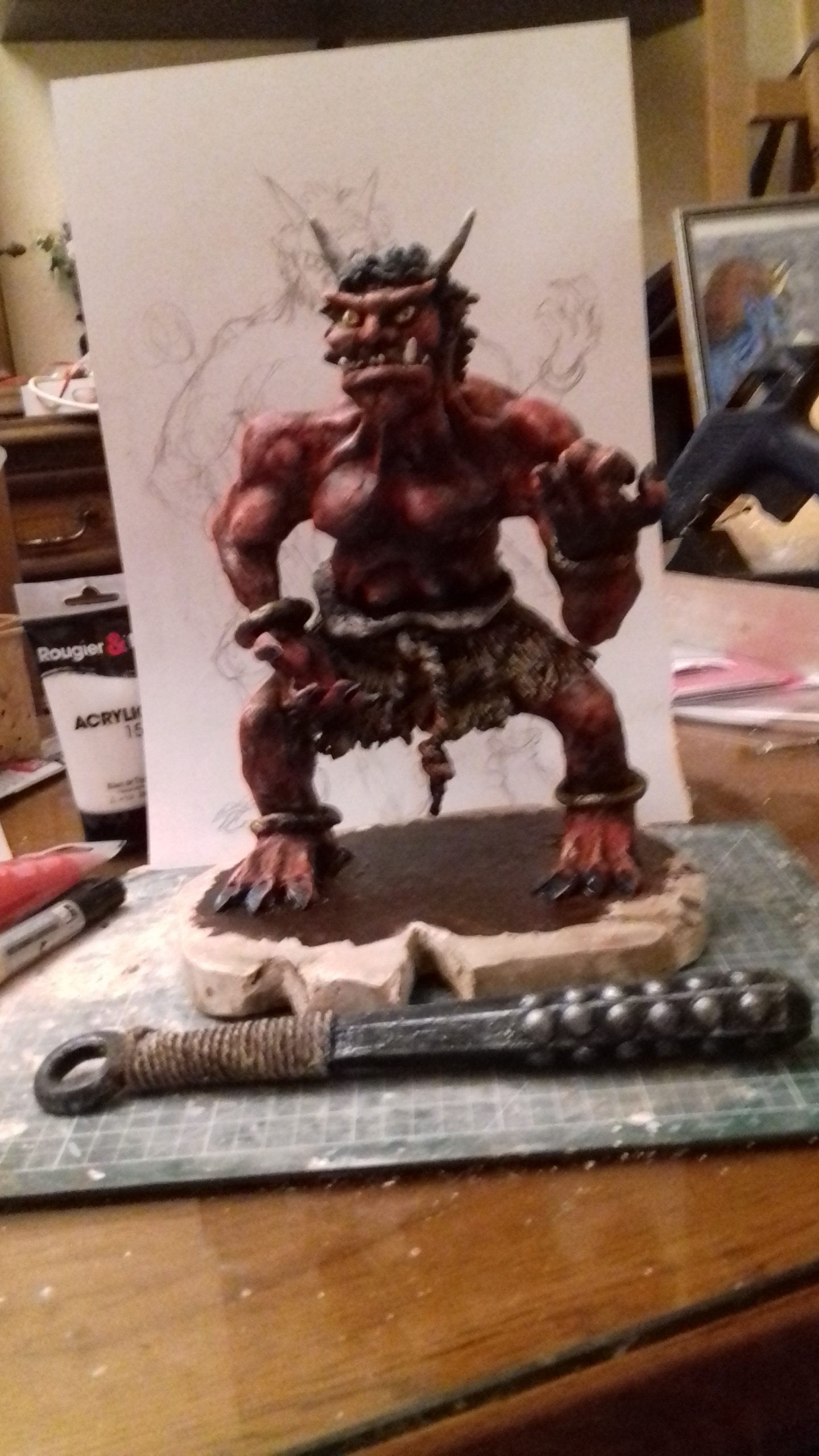
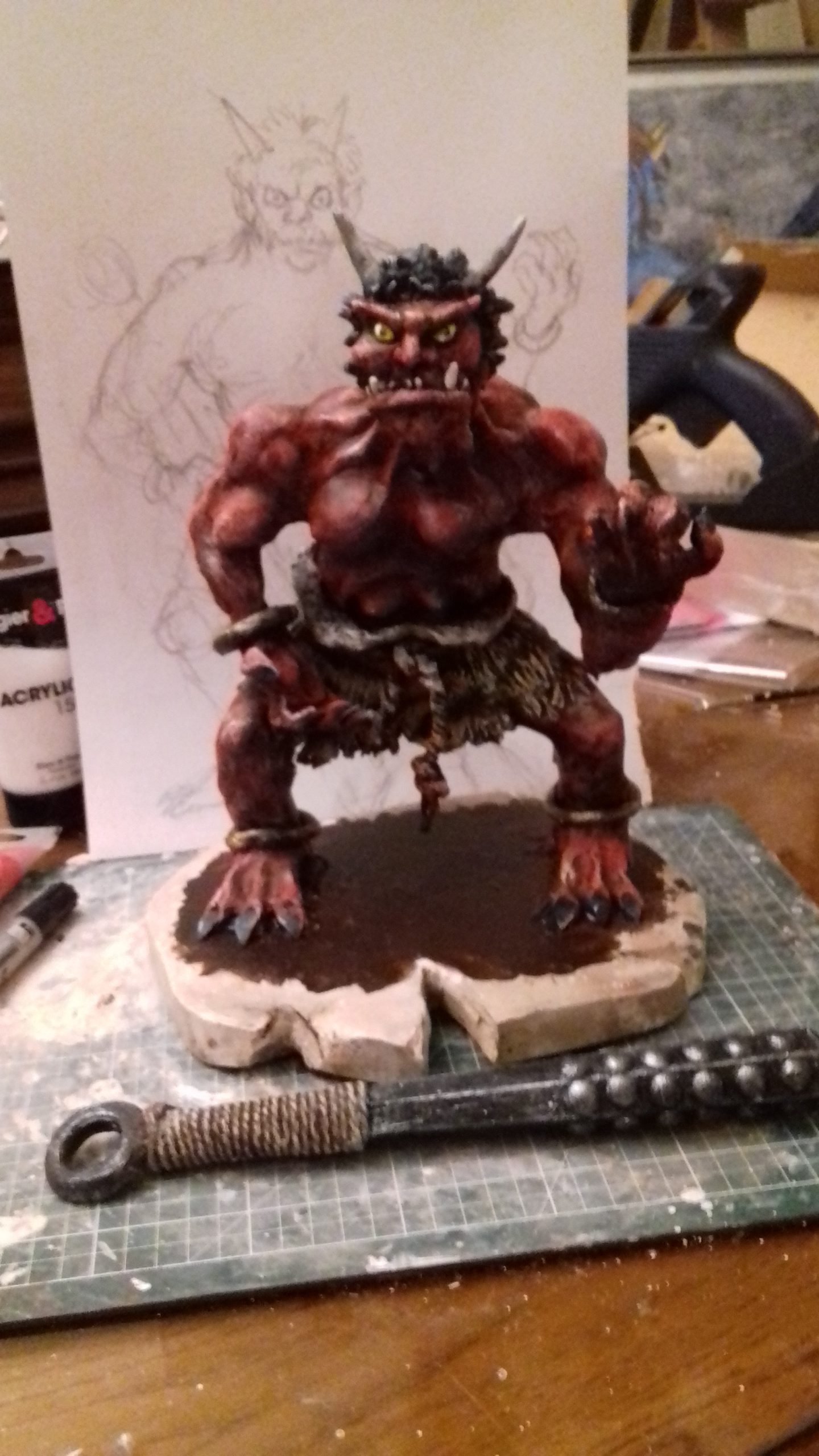
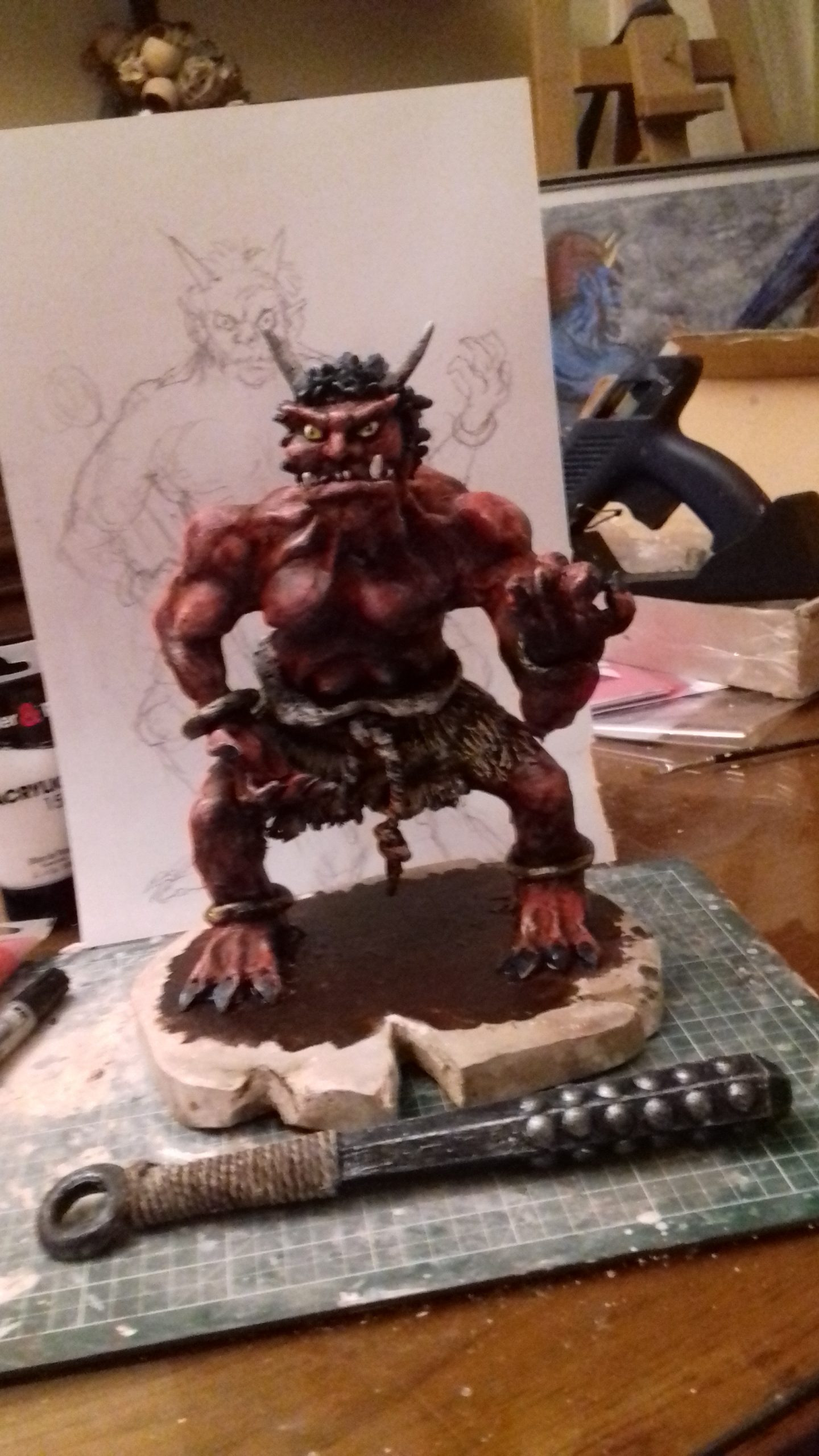
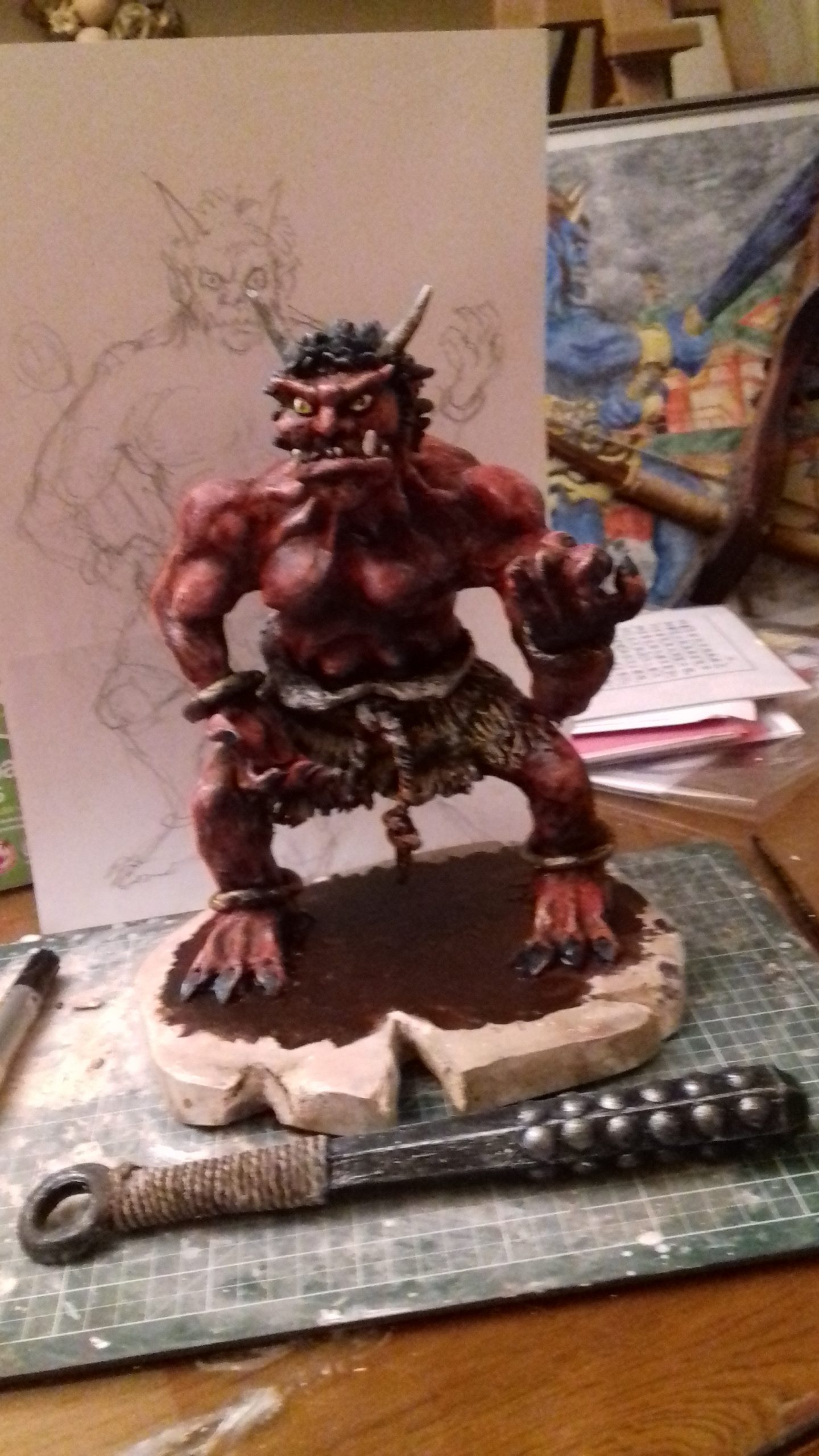
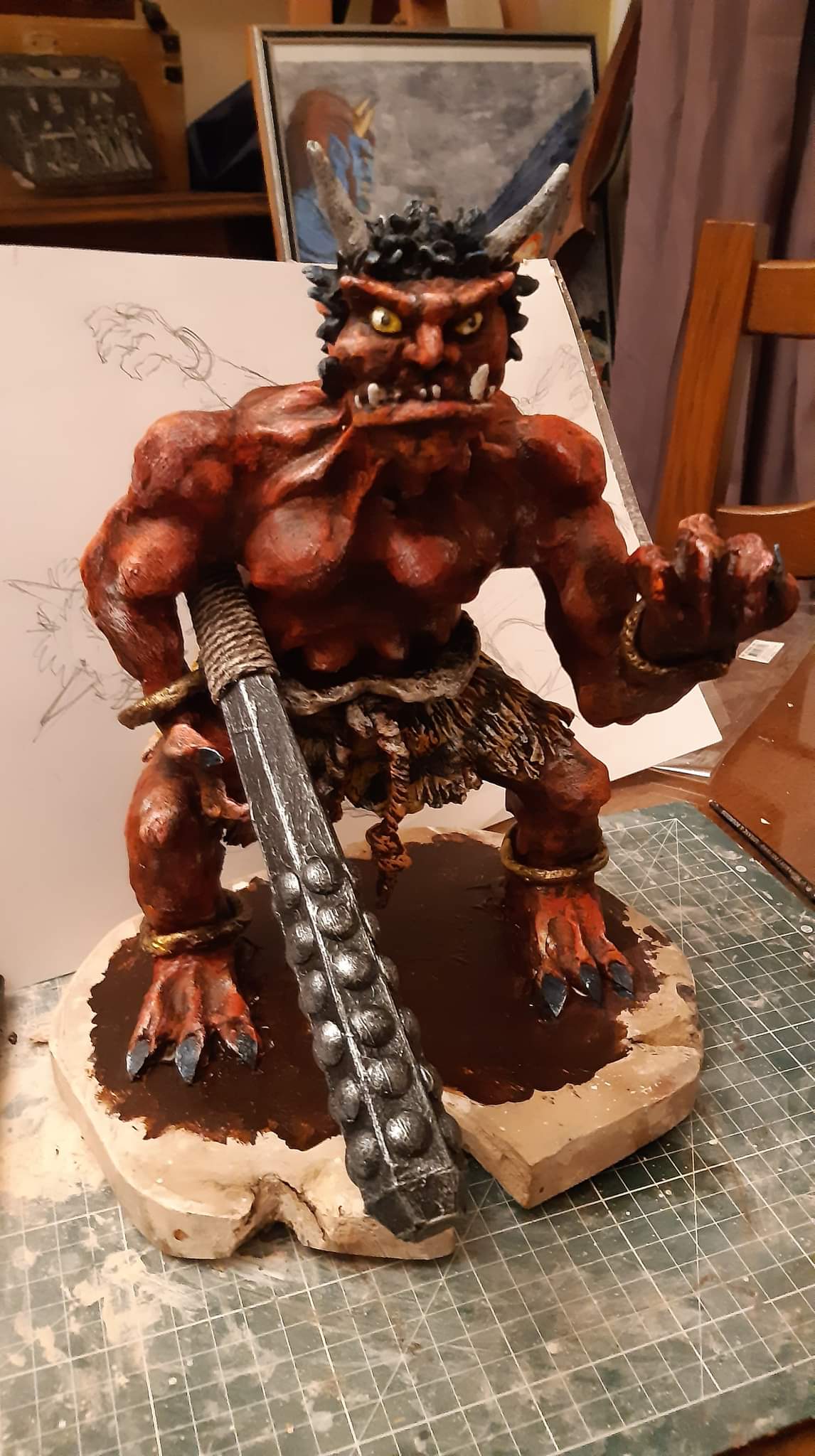
I’ve wanted to make a decent-sized figurine depicting an oni – an ogre or demon as it’s usually portrayed in traditional tales – for quite some time.
Follow the various stages of its production below.
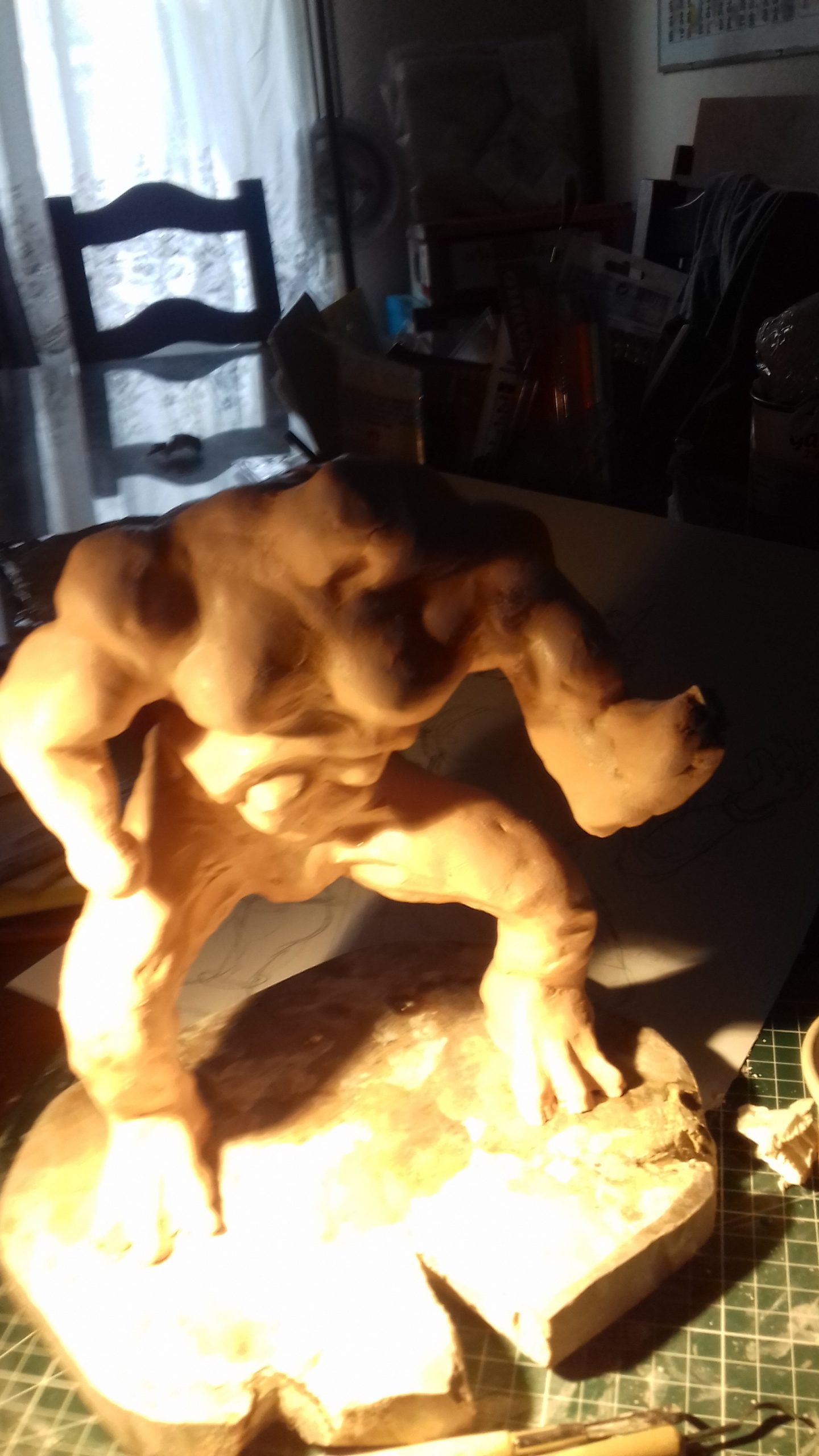
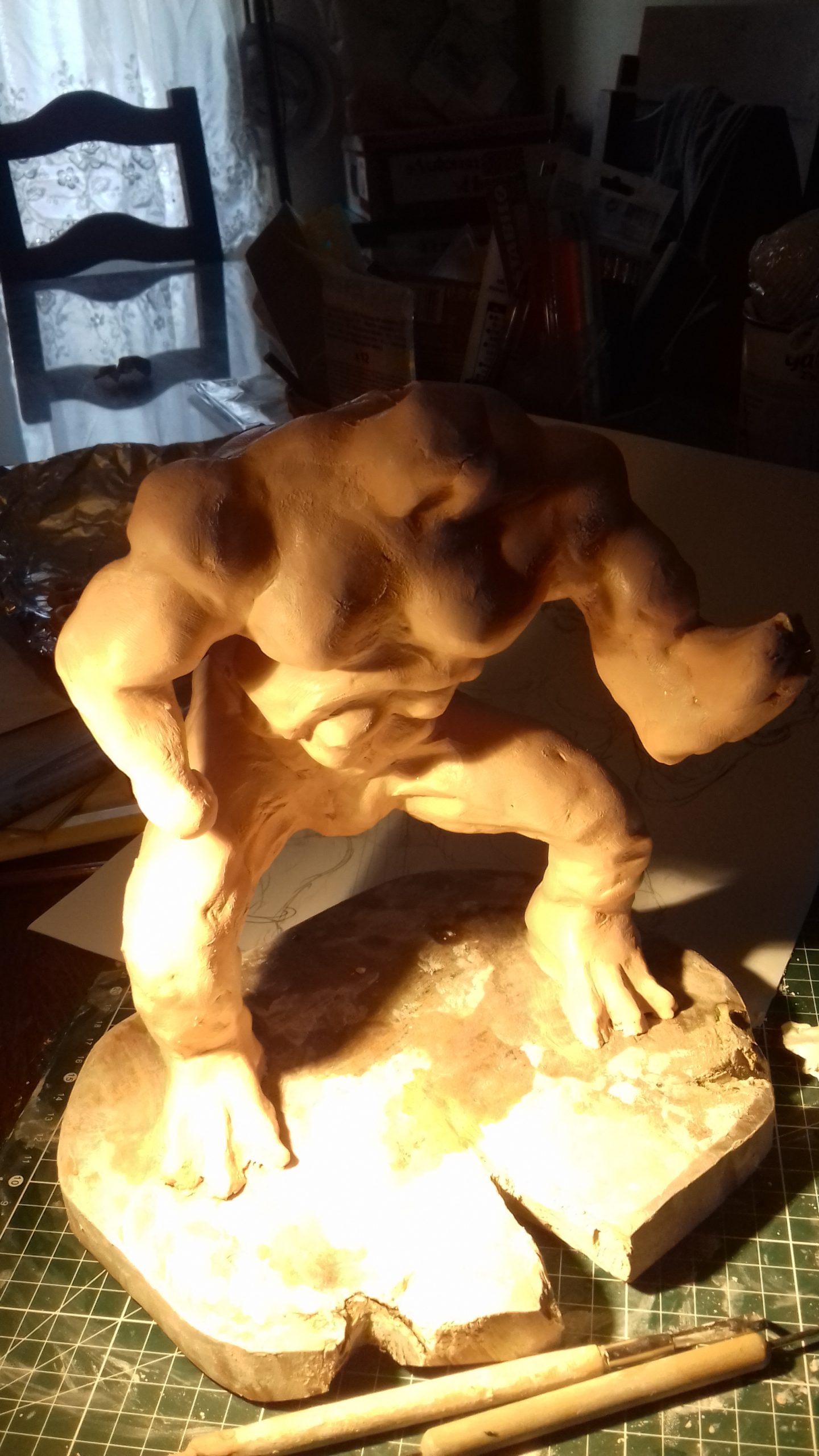
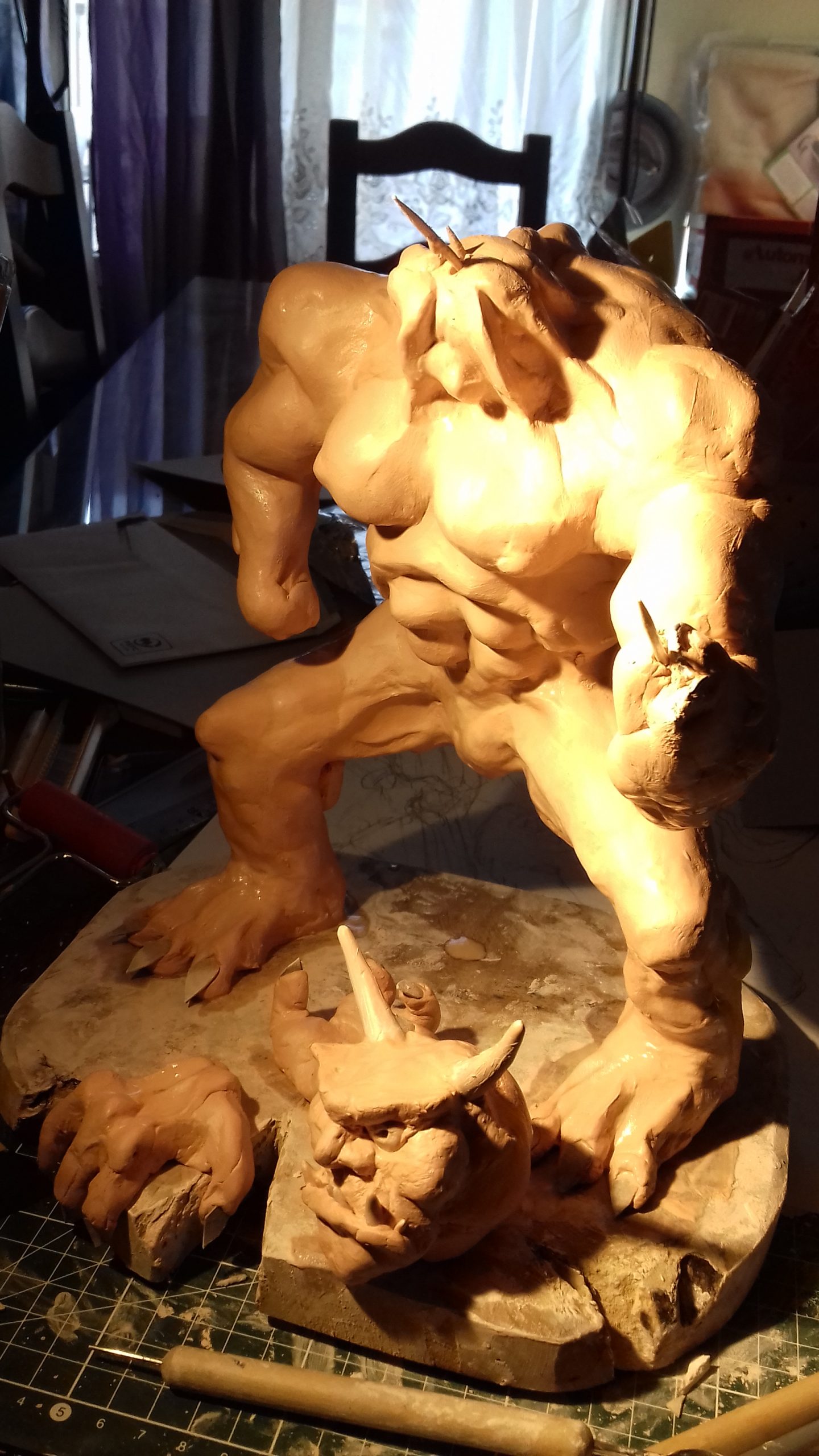
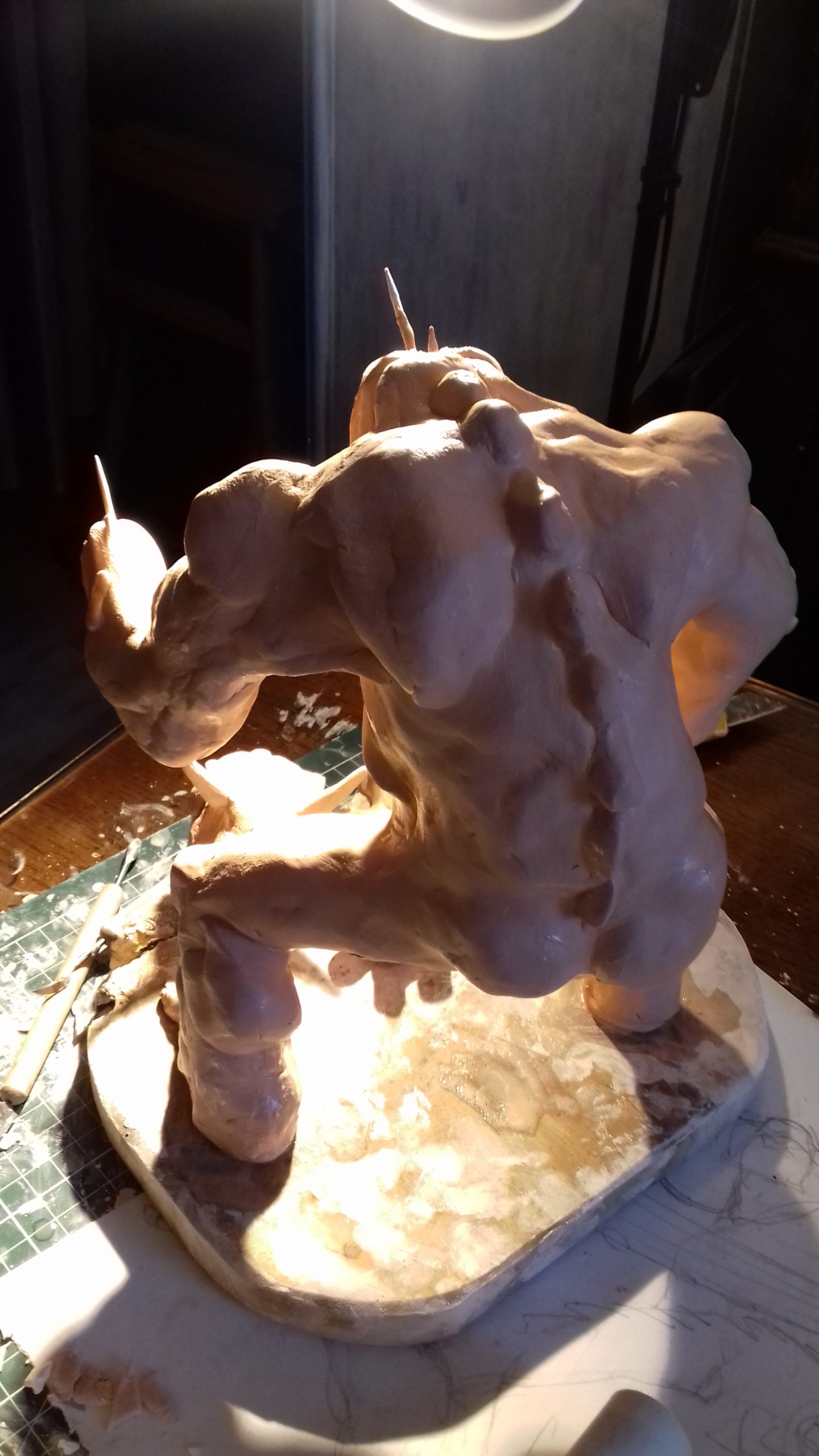
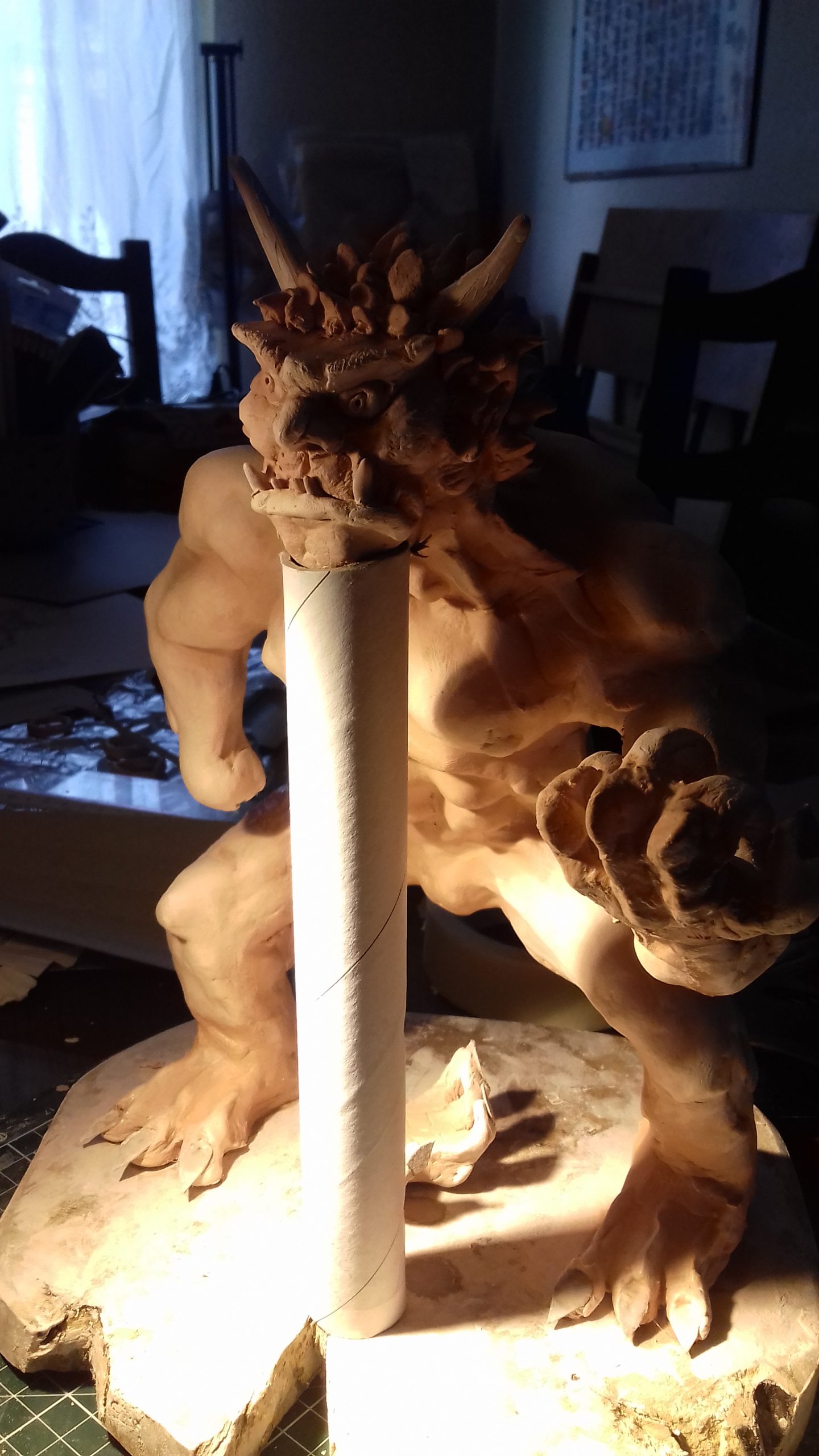
I started with a sturdy wire frame secured to a thick wooden plank, which actually happens to be a trivet that’s barely been stripped of its bark. I gave it that hunched posture reminiscent of the troll figurines from medieval fantasy strategy games. I wrapped this frame in aluminium foil, which helps to shape the basic musculature, as well as the head. Then I covered the whole thing with a layer of air-drying clay.
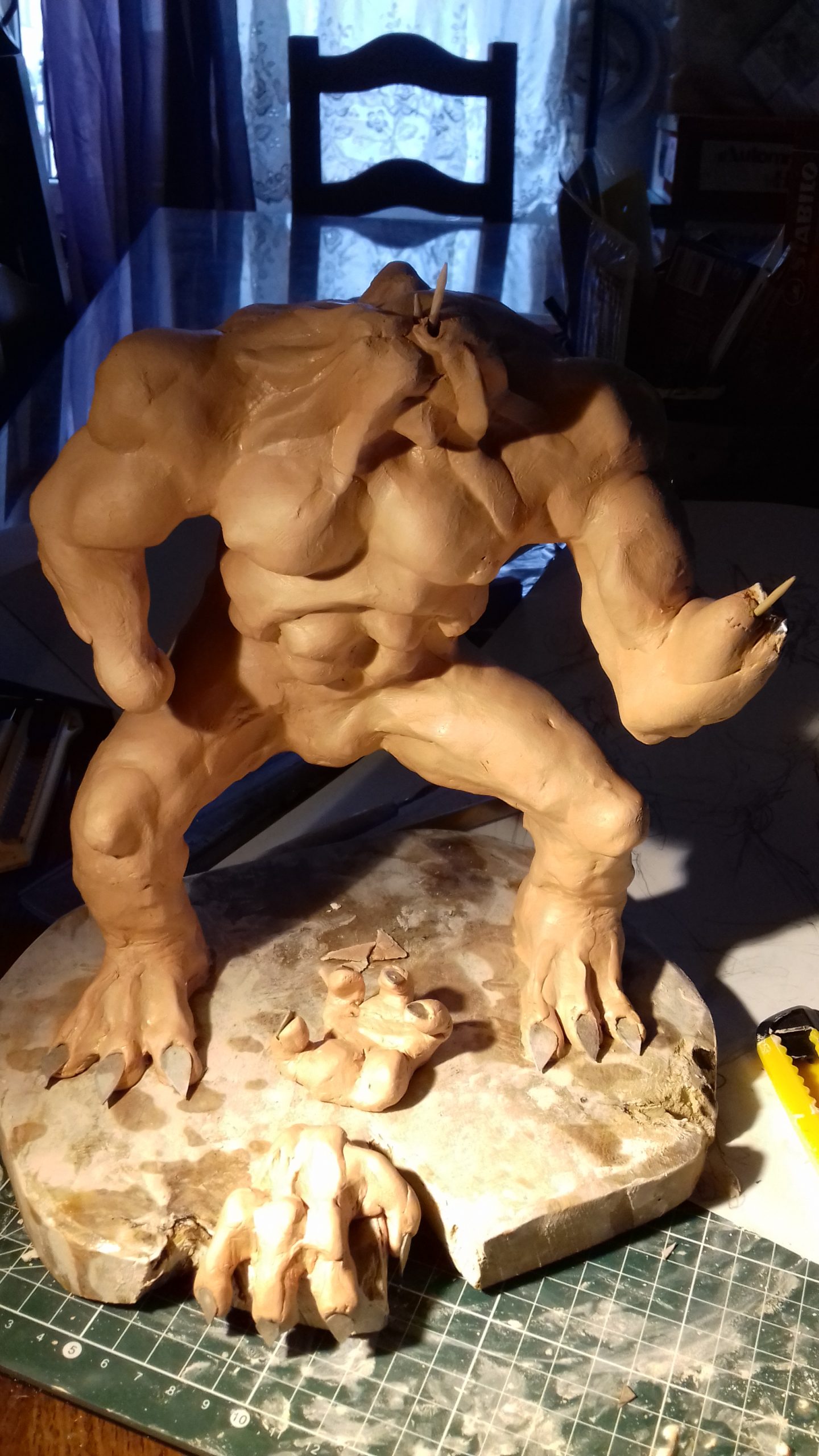
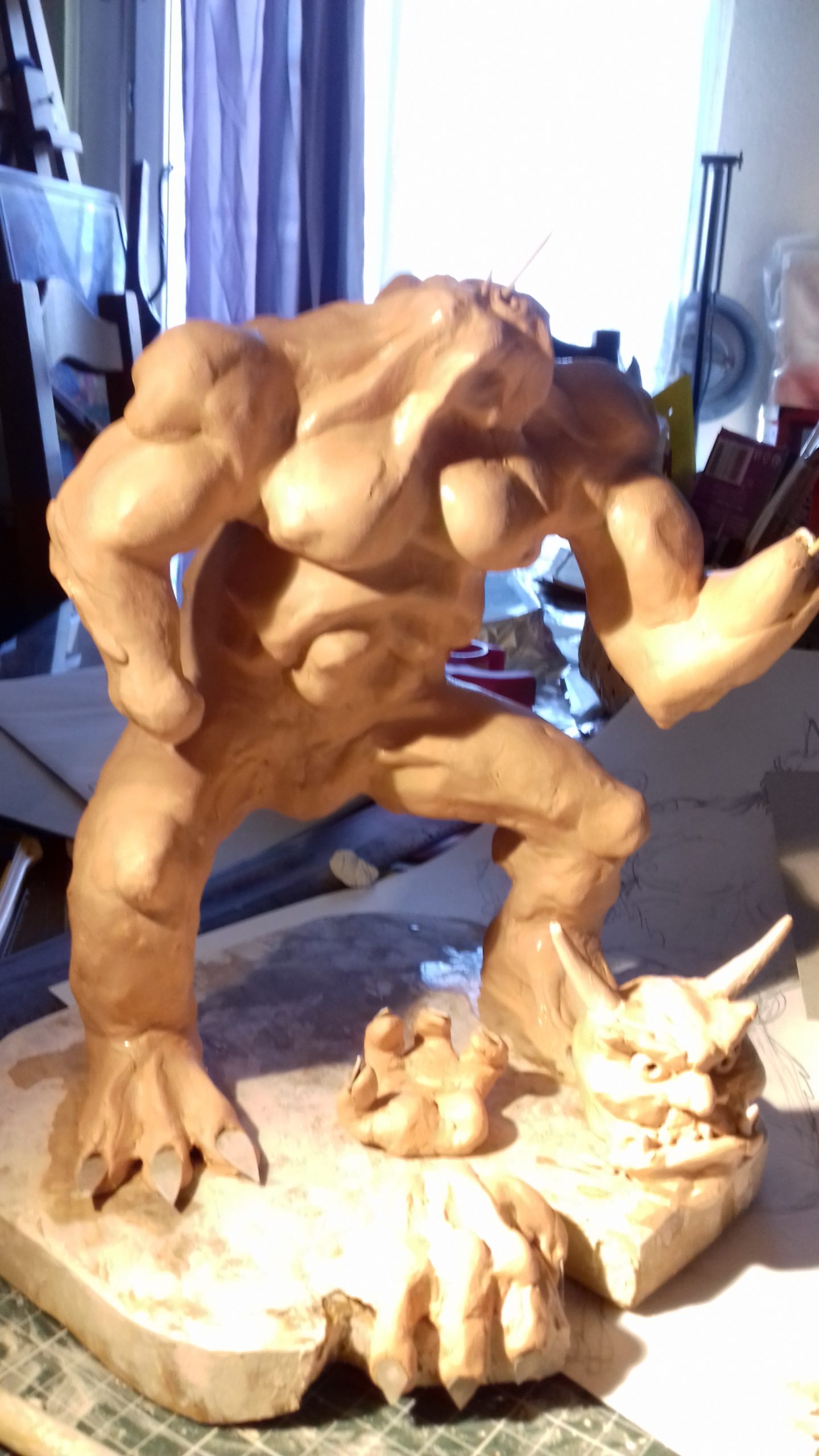
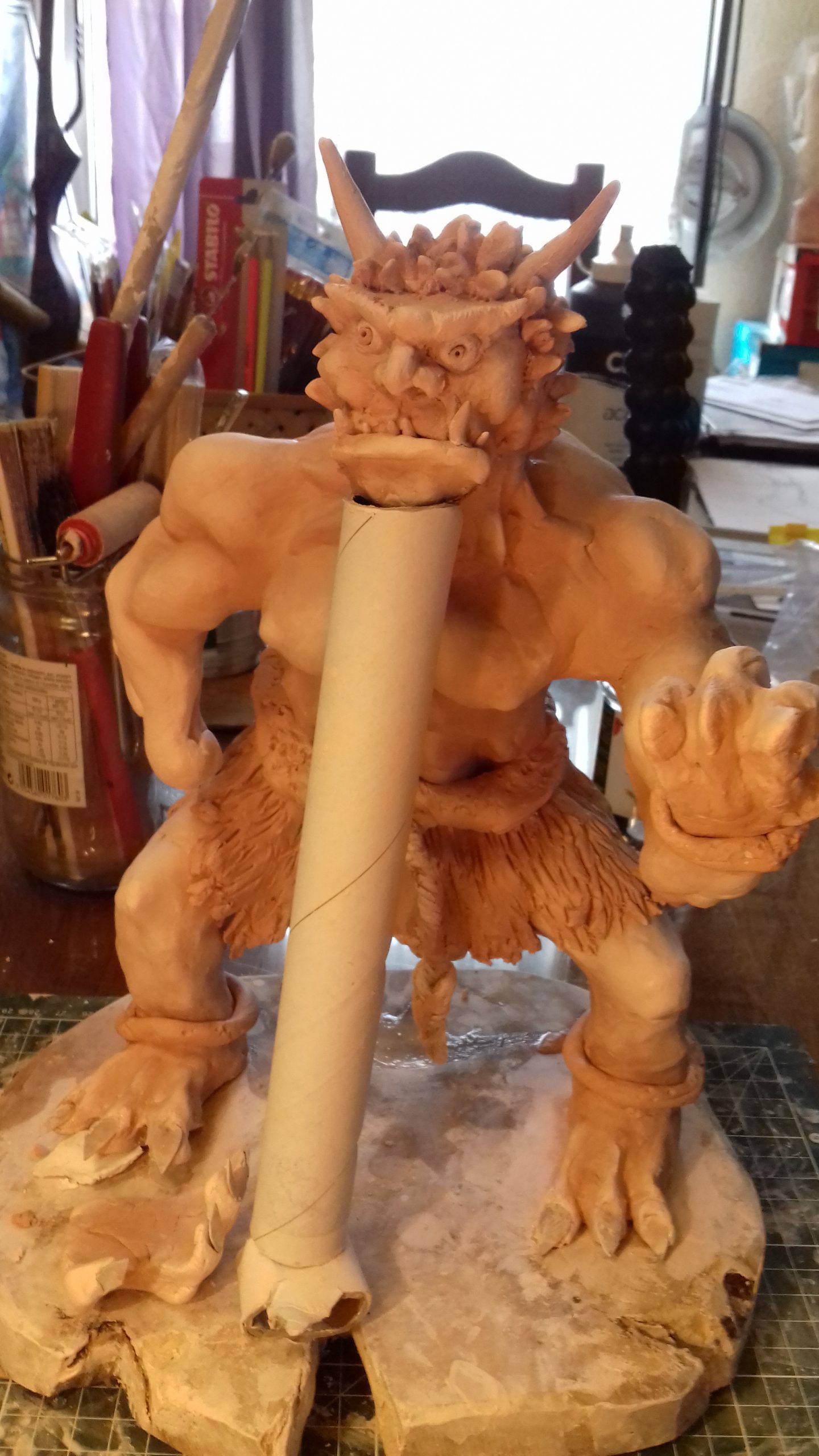
I shape his toes and fingers, the details of his musculature with a few protruding veins, and his head.
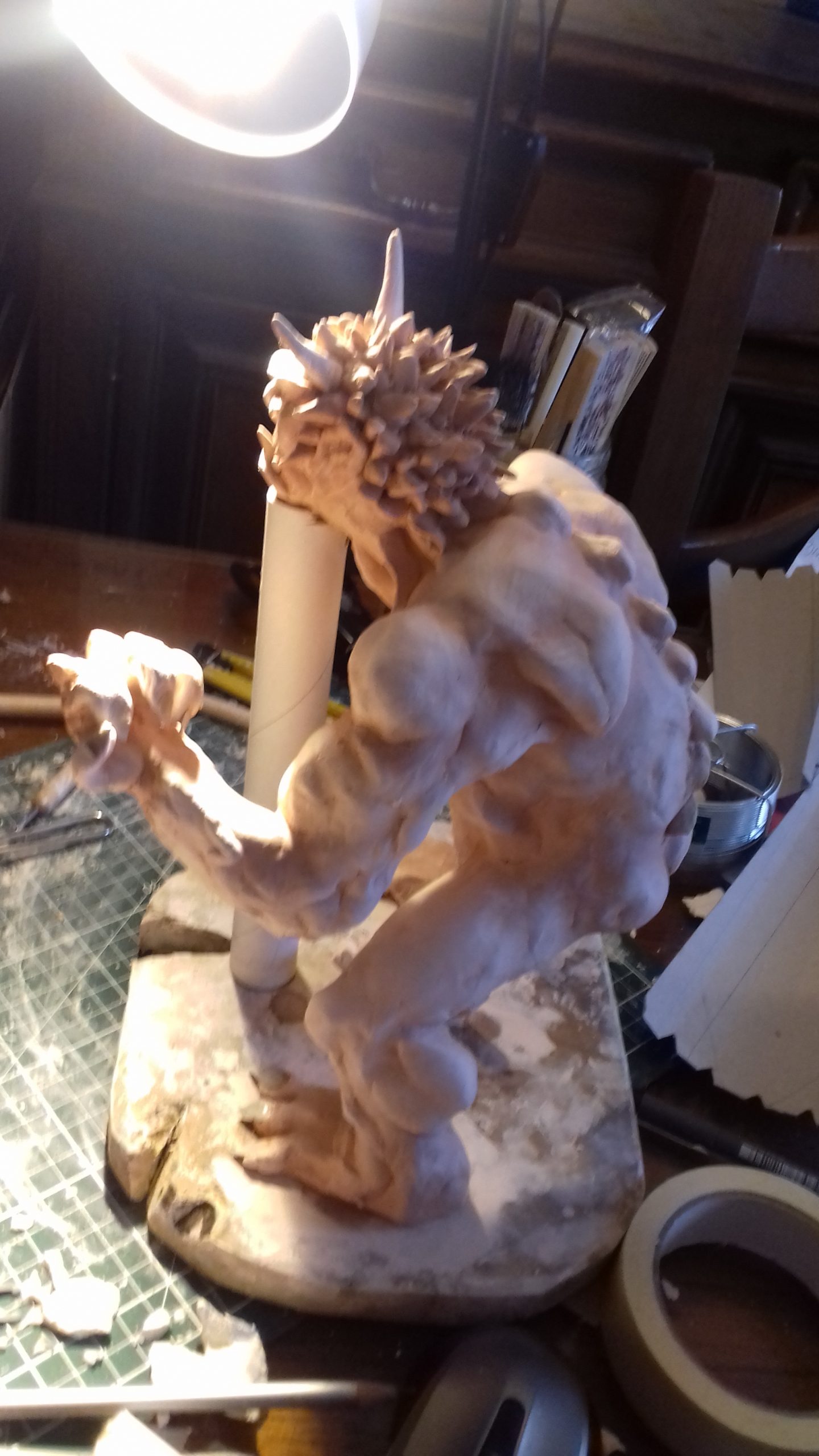
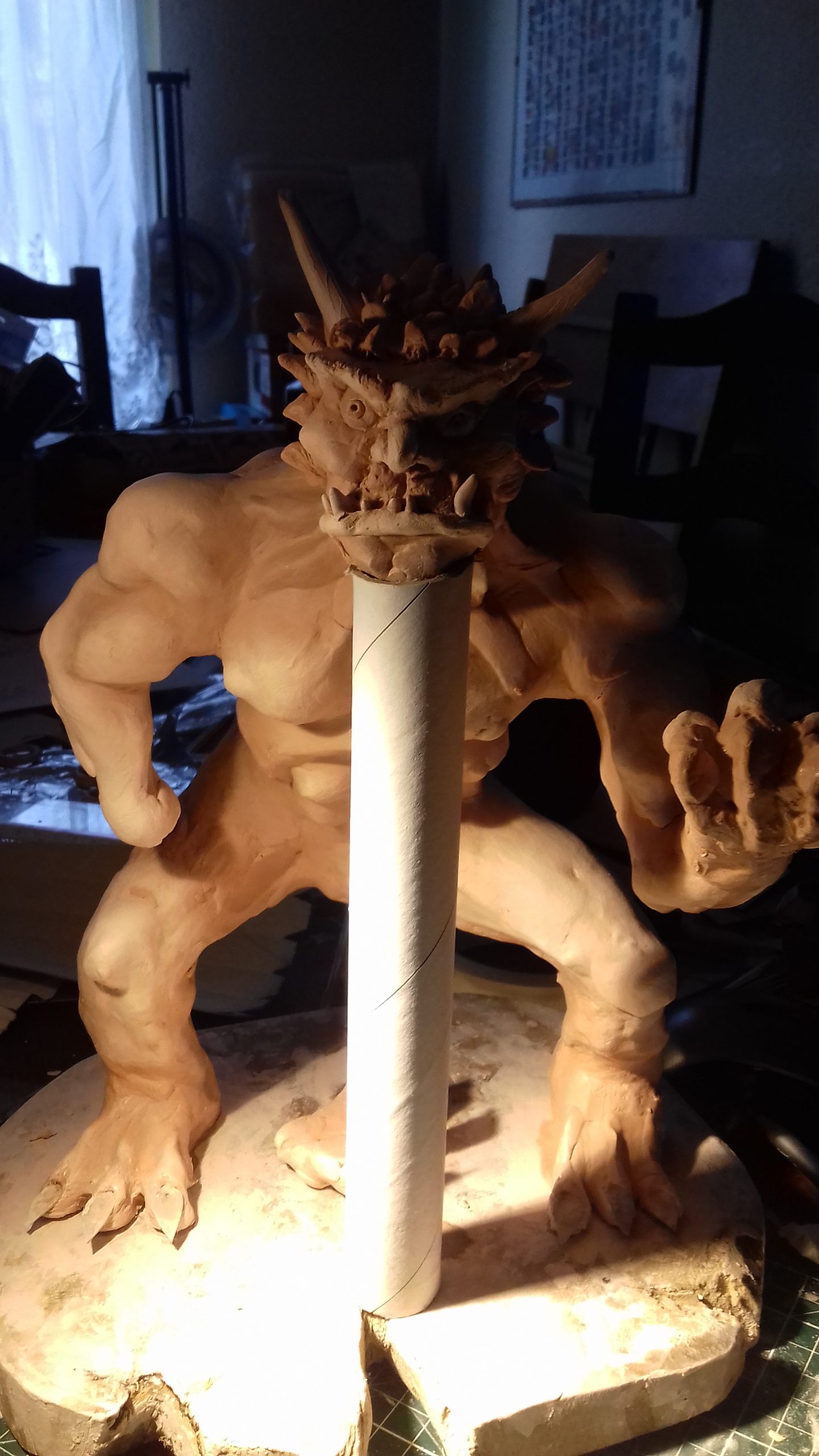
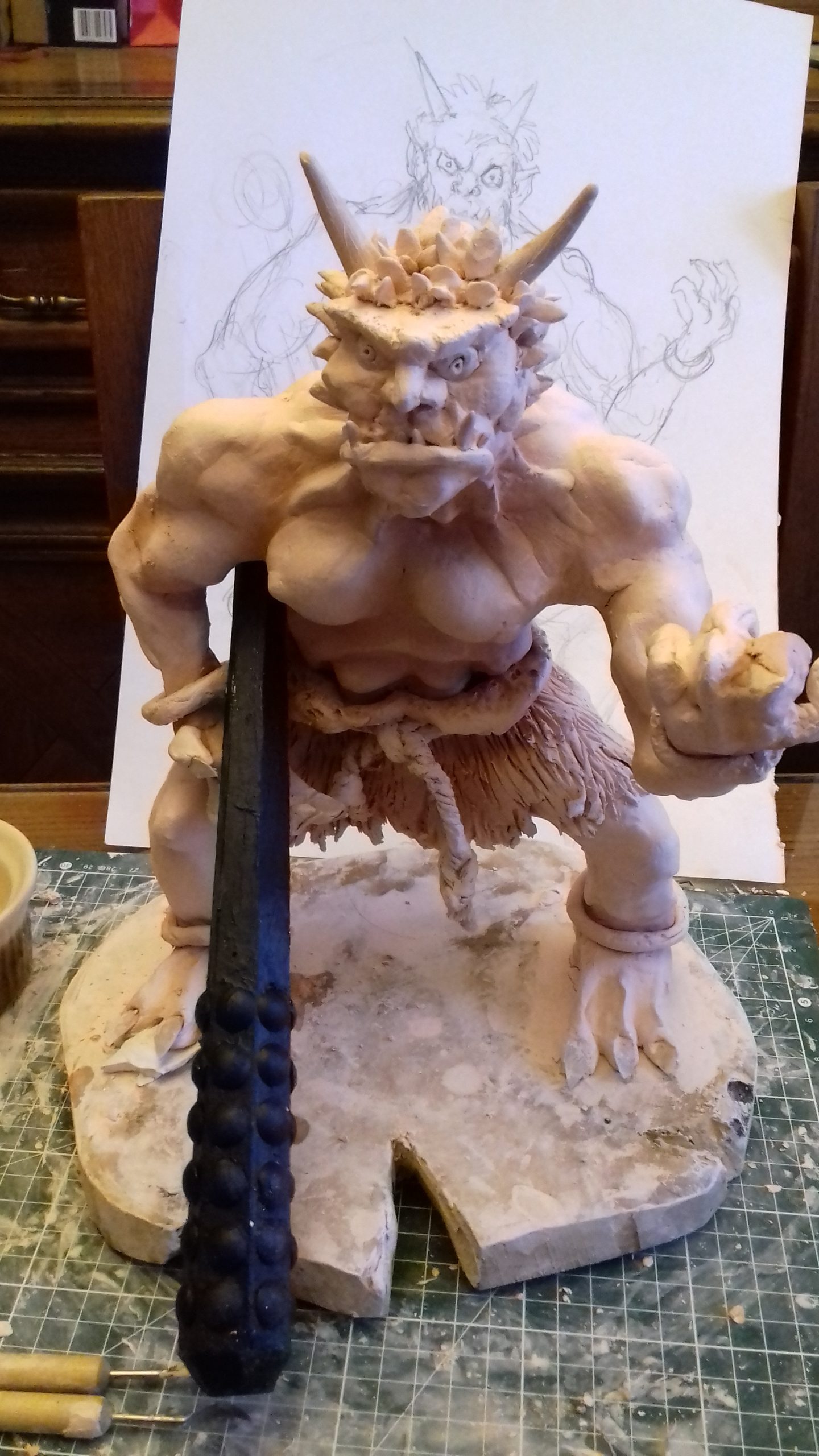
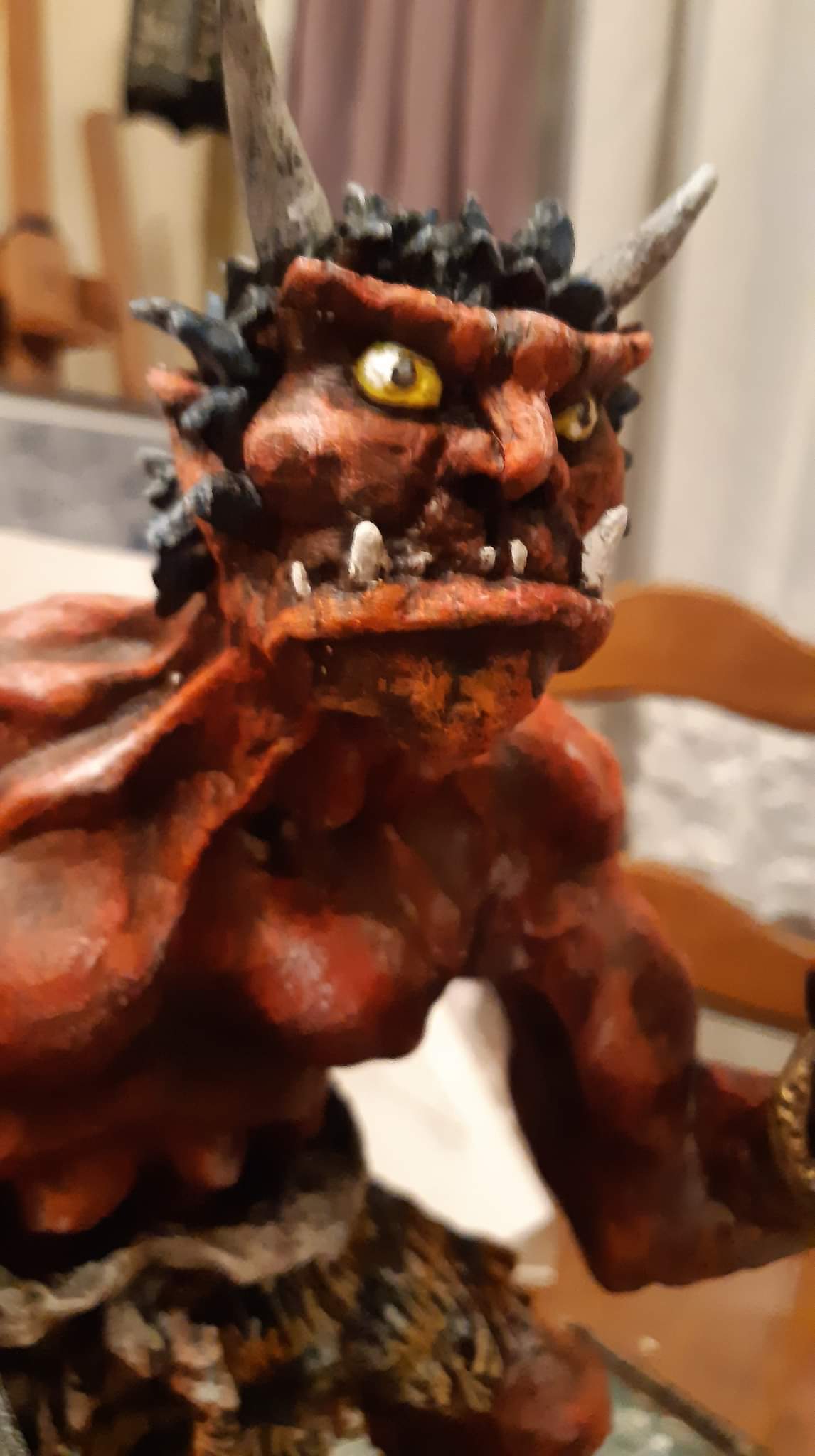
Using two toothpicks stuck into his head, I shape his horns, around which I arrange small cones of clay to create his shaggy hair. Once the body is completely dry, I can add his bracelets to his wrists and ankles, as well as his loincloth. The loincloth is made from a piece of clay flattened with a rolling pin, roughly cut, and textured to resemble fur. It is placed around his waist and held in place with a piece of thick string tied across his stomach like a belt.
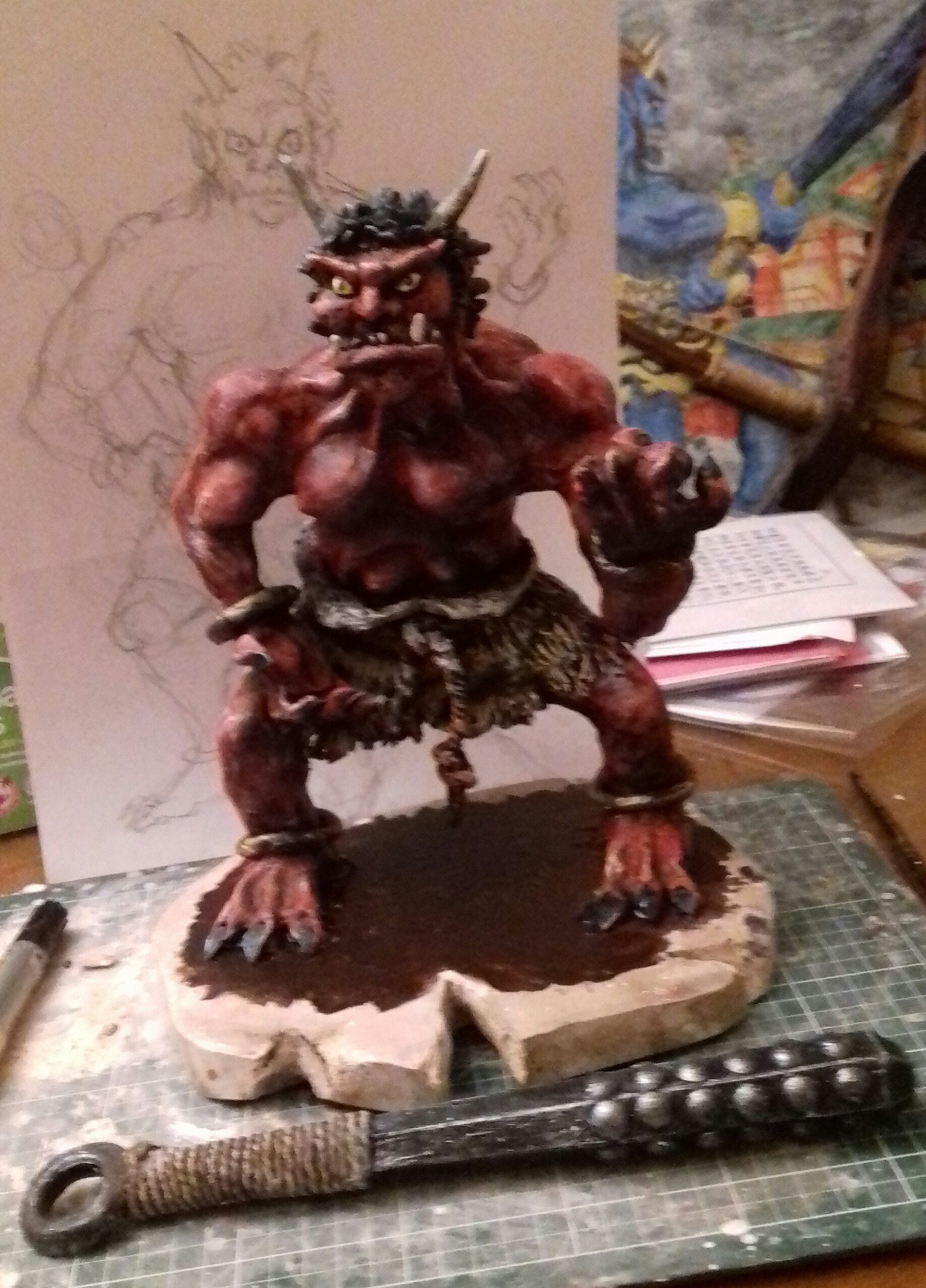
Once everything is completely dry, I can start painting: a full coat of black, followed by dry-brushing with red, orange and then yellow for his skin; yellow and white for his loincloth; blue for his hair; and grey and white for his horns and fangs (tusks). A few touches of gold for his bracelets, and yellow for his eyes with black pupils. To decorate the base, I simply coated it with glue and scattered small pebbles over it.
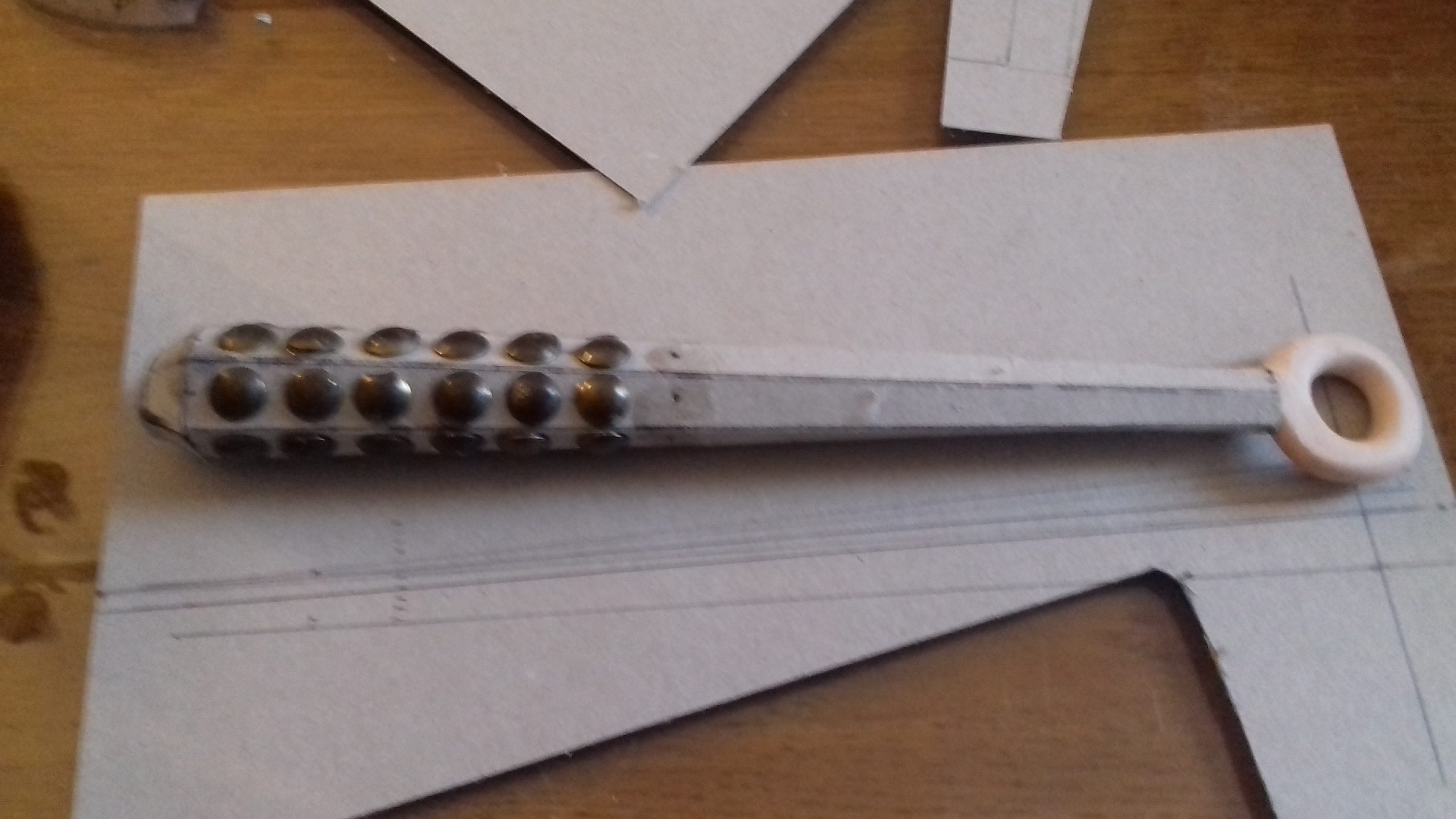
For his kanabô, which has a rather geometric design, I opted for a structure made of thick, glued-together cardboard, into which I hammered large upholstery nails. A long piece of string is wound around the shaft. The loop on the pommel is modelled from clay, with a protrusion long enough to be inserted into the shaft. I didn’t glue it on. I preferred to keep it removable so that I could slip the kanabô under her arm and take it off when the figurine needs to be put away or transported. The kanabô has also been painted black, with silver brush-strokes for the metal parts and beige for the shaft.
Premier modelage à l'argile
Je lui modèle ses orteils et ses doigts, les détails de sa musculature avec quelques veines saillantes, et sa tête.
Premier modelage à l'argile
Premier modelage à l'argile
Premier modelage à l'argile
Premier modelage à l'argile
Premier modelage à l'argile
Premier modelage à l'argile
Premier modelage à l'argile
Premier modelage à l'argile
Premier modelage à l'argile
Premier modelage à l'argile
Fabrication du oni rouge : Sculpture de la tête
A partir de deux cure-dents plantés dans sa tête, je modèle ses cornes autour desquelles je dispose des petits cônes d’argile pour faire sa chevelure hirsute. Une fois le corps entièrement séché, je peux lui ajouter ses bracelets à ses poignets et ses chevilles, ainsi que son pagne. Ce dernier est fait d’un bout d’argile aplati au rouleau, coupé grossièrement, et texturé de façon à rappeler une fourrure. Le pagne est placé autour de sa taille et maintenu avec un bout de ficelle épaisse noué sur le ventre comme une ceinture.
Fabrication du oni rouge : Sculpture de la tête
Fabrication du oni rouge : Sculpture de la tête
Fabrication du oni rouge : Sculpture de la tête
Fabrication du oni rouge : Sculpture de la tête
Fabrication du oni rouge : Sculpture de la tête
Fabrication du oni rouge : Sculpture de la tête
Fabrication du oni rouge : mise en peinture
Lorsque le tout est bien sec, je peux procéder à la peinture : une couche de noir intégrale, puis un brossage à sec de rouge, d’orange puis de jaune, pour sa peau, un brossage de jaune et blanc pour son pagne, de bleu pour ses cheveux, et de gris et de blanc pour ses cornes et ses crocs (défenses). Quelques touches de doré pour ses bracelets, et de jaune pour ses yeux avec ses pupilles noires. Pour décorer le socle, je l’ai simplement enduit de colle, et parsemé de petits cailloux.
Fabrication du oni rouge : mise en peinture
Lorsque le tout est bien sec, je peux procéder à la peinture : une couche de noir intégrale, puis un brossage à sec de rouge, d’orange puis de jaune, pour sa peau, un brossage de jaune et blanc pour son pagne, de bleu pour ses cheveux, et de gris et de blanc pour ses cornes et ses crocs (défenses). Quelques touches de doré pour ses bracelets, et de jaune pour ses yeux avec ses pupilles noires. Pour décorer le socle, je l’ai simplement enduit de colle, et parsemé de petits cailloux.
Fabrication du oni rouge : mise en peinture
Lorsque le tout est bien sec, je peux procéder à la peinture : une couche de noir intégrale, puis un brossage à sec de rouge, d’orange puis de jaune, pour sa peau, un brossage de jaune et blanc pour son pagne, de bleu pour ses cheveux, et de gris et de blanc pour ses cornes et ses crocs (défenses). Quelques touches de doré pour ses bracelets, et de jaune pour ses yeux avec ses pupilles noires. Pour décorer le socle, je l’ai simplement enduit de colle, et parsemé de petits cailloux.
Fabrication du oni rouge : mise en peinture
Lorsque le tout est bien sec, je peux procéder à la peinture : une couche de noir intégrale, puis un brossage à sec de rouge, d’orange puis de jaune, pour sa peau, un brossage de jaune et blanc pour son pagne, de bleu pour ses cheveux, et de gris et de blanc pour ses cornes et ses crocs (défenses). Quelques touches de doré pour ses bracelets, et de jaune pour ses yeux avec ses pupilles noires. Pour décorer le socle, je l’ai simplement enduit de colle, et parsemé de petits cailloux.
Fabrication du oni rouge : mise en peinture
Lorsque le tout est bien sec, je peux procéder à la peinture : une couche de noir intégrale, puis un brossage à sec de rouge, d’orange puis de jaune, pour sa peau, un brossage de jaune et blanc pour son pagne, de bleu pour ses cheveux, et de gris et de blanc pour ses cornes et ses crocs (défenses). Quelques touches de doré pour ses bracelets, et de jaune pour ses yeux avec ses pupilles noires. Pour décorer le socle, je l’ai simplement enduit de colle, et parsemé de petits cailloux.
Fabrication du oni rouge : mise en peinture
Lorsque le tout est bien sec, je peux procéder à la peinture : une couche de noir intégrale, puis un brossage à sec de rouge, d’orange puis de jaune, pour sa peau, un brossage de jaune et blanc pour son pagne, de bleu pour ses cheveux, et de gris et de blanc pour ses cornes et ses crocs (défenses). Quelques touches de doré pour ses bracelets, et de jaune pour ses yeux avec ses pupilles noires. Pour décorer le socle, je l’ai simplement enduit de colle, et parsemé de petits cailloux.
Fabrication du oni rouge : mise en peinture
Lorsque le tout est bien sec, je peux procéder à la peinture : une couche de noir intégrale, puis un brossage à sec de rouge, d’orange puis de jaune, pour sa peau, un brossage de jaune et blanc pour son pagne, de bleu pour ses cheveux, et de gris et de blanc pour ses cornes et ses crocs (défenses). Quelques touches de doré pour ses bracelets, et de jaune pour ses yeux avec ses pupilles noires. Pour décorer le socle, je l’ai simplement enduit de colle, et parsemé de petits cailloux.
Fabication du oni rouge : le kanabô
Pour son kanabô, qui est plutôt géométrique, j’ai opté pour un volume en carton épais collé, dans lequel j’ai planté de gros clous de tapissier. Un long bout de ficelle est enroulé autour de la hampe. La boucle du pommeau est modelée en argile, dotée d’une excroissance assez longue pour être insérée dans la hampe. Je ne l’ai pas collée. J’ai préféré la garder amovible de façon à pouvoir passer le kanabô sous son bras, l’enlever quand il faut ranger la figurine pour. La transporter. Le kanabô a aussi été peint en noir, et brossé d’argenté pour les parties métalliques, et de beige pour la hampe.
Lorem ipsum dolor sit amet. Est cupiditate iste a nostrum laudantium eum ducimus fugit hic quia dolorem. Ut explicabo corporis in omnis consequatur nam facere nihil ut dolor molestias ut quasi internos ea ducimus nihil.
Ut distinctio neque sed distinctio consequatur est velit omnis. In modi facere sit consectetur nisi id neque laboriosam ut facere nobis sed facere maiores.
In cumque iste est veritatis molestiae id accusantium necessitatibus et magnam suscipit aut autem nostrum ut repellat porro? Hic praesentium dignissimos ut quidem quasi et deleniti ipsum.
autre titre ?
<h2 data-interaction-id="c232e7d" class="e-c232e7d-1c8ca61 e-heading-base">Événement !</h2>

</div>
<div class="elementor-element elementor-element-30655b0e e-con e-atomic-element e-flexbox-base e-30655b0e-53278a7 " data-id="30655b0e" data-element_type="e-flexbox" data-e-type="e-flexbox" data-interaction-id="30655b0e">
    <div class="elementor-element elementor-element-1937bf73 e-con e-atomic-element e-flexbox-base e-1937bf73-6eff82b " data-id="1937bf73" data-element_type="e-flexbox" data-e-type="e-flexbox" data-interaction-id="1937bf73">
    <div class="elementor-element elementor-element-7146ae48 e-con e-atomic-element e-flexbox-base e-7146ae48-94669bd " data-id="7146ae48" data-element_type="e-flexbox" data-e-type="e-flexbox" data-interaction-id="7146ae48">
    			<picture><source type="image/webp" srcset="https://shiruban.fr/wp-content/uploads/2026/08/LogoAtelier.webp"><img loading="lazy" decoding="async" class="e-image-base e-69fe8fa7-e804f26" data-interaction-id="69fe8fa7" id="4369" src="https://shiruban.fr/wp-content/uploads/2026/08/LogoAtelier.png" width="1138" height="1098" srcset="https://shiruban.fr/wp-content/uploads/2026/08/LogoAtelier.png 1138w, https://shiruban.fr/wp-content/uploads/2026/08/LogoAtelier-300x289.png 300w, https://shiruban.fr/wp-content/uploads/2026/08/LogoAtelier-1024x988.png 1024w, https://shiruban.fr/wp-content/uploads/2026/08/LogoAtelier-768x741.png 768w" alt=""></picture>
</div>

</div>
<div class="elementor-element elementor-element-7cb6cfc6 e-con e-atomic-element e-flexbox-base e-7cb6cfc6-b82a1ab " data-id="7cb6cfc6" data-element_type="e-flexbox" data-e-type="e-flexbox" data-interaction-id="7cb6cfc6">
    		<div class="elementor-element elementor-element-61bc361 jltma-glass-effect-no elementor-widget elementor-widget-heading" data-id="61bc361" data-element_type="widget" data-e-type="widget" data-widget_type="heading.default">
				<div class="elementor-widget-container">
					<h3 class="elementor-heading-title elementor-size-default">Des frissons par cette chaleur, racontons des histoires de yôkai!</h3>				</div>
				</div>
				<div class="elementor-element elementor-element-700b42e3 elementor-position-right elementor-vertical-align-top jltma-glass-effect-no elementor-widget elementor-widget-image-box" data-id="700b42e3" data-element_type="widget" data-e-type="widget" data-widget_type="image-box.default">
				<div class="elementor-widget-container">
					<div class="elementor-image-box-wrapper"><figure class="elementor-image-box-img"><picture><source type="image/webp" srcset="https://shiruban.fr/wp-content/uploads/2026/08/OniRouge.webp"><img loading="lazy" decoding="async" width="1008" height="1008" src="https://shiruban.fr/wp-content/uploads/2026/08/OniRouge.png" class="attachment-full size-full wp-image-4372" alt="" srcset="https://shiruban.fr/wp-content/uploads/2026/08/OniRouge.png 1008w, https://shiruban.fr/wp-content/uploads/2026/08/OniRouge-300x300.png 300w, https://shiruban.fr/wp-content/uploads/2026/08/OniRouge-150x150.png 150w, https://shiruban.fr/wp-content/uploads/2026/08/OniRouge-768x768.png 768w" sizes="(max-width: 1008px) 100vw, 1008px"></picture></figure><div class="elementor-image-box-content"><h3 class="elementor-image-box-title">Atelier de dessin sur les yôkai</h3><p class="elementor-image-box-description">Événement en ligne entre la France et le Japon</p></div></div>				</div>
				</div>

</div>
<div class="elementor-element elementor-element-14b1d70f e-con e-atomic-element e-flexbox-base e-14b1d70f-d40951f " data-id="14b1d70f" data-element_type="e-flexbox" data-e-type="e-flexbox" data-interaction-id="14b1d70f">
    		<div class="elementor-element elementor-element-3c318d78 jltma-glass-effect-no elementor-widget elementor-widget-text-editor" data-id="3c318d78" data-element_type="widget" data-e-type="widget" data-widget_type="text-editor.default">
				<div class="elementor-widget-container">
									<p><span class="a_GcMg font-feature-liga-off font-feature-clig-off font-feature-calt-off text-decoration-none text-strikethrough-none">Les récits japonais ne sont pas que terrifiants, laissez-vous emporter dans des aventures épiques !</span></p>								</div>
				</div>
				<div class="elementor-element elementor-element-5cc191d8 jltma-glass-effect-no elementor-widget elementor-widget-text-editor" data-id="5cc191d8" data-element_type="widget" data-e-type="widget" data-widget_type="text-editor.default">
				<div class="elementor-widget-container">
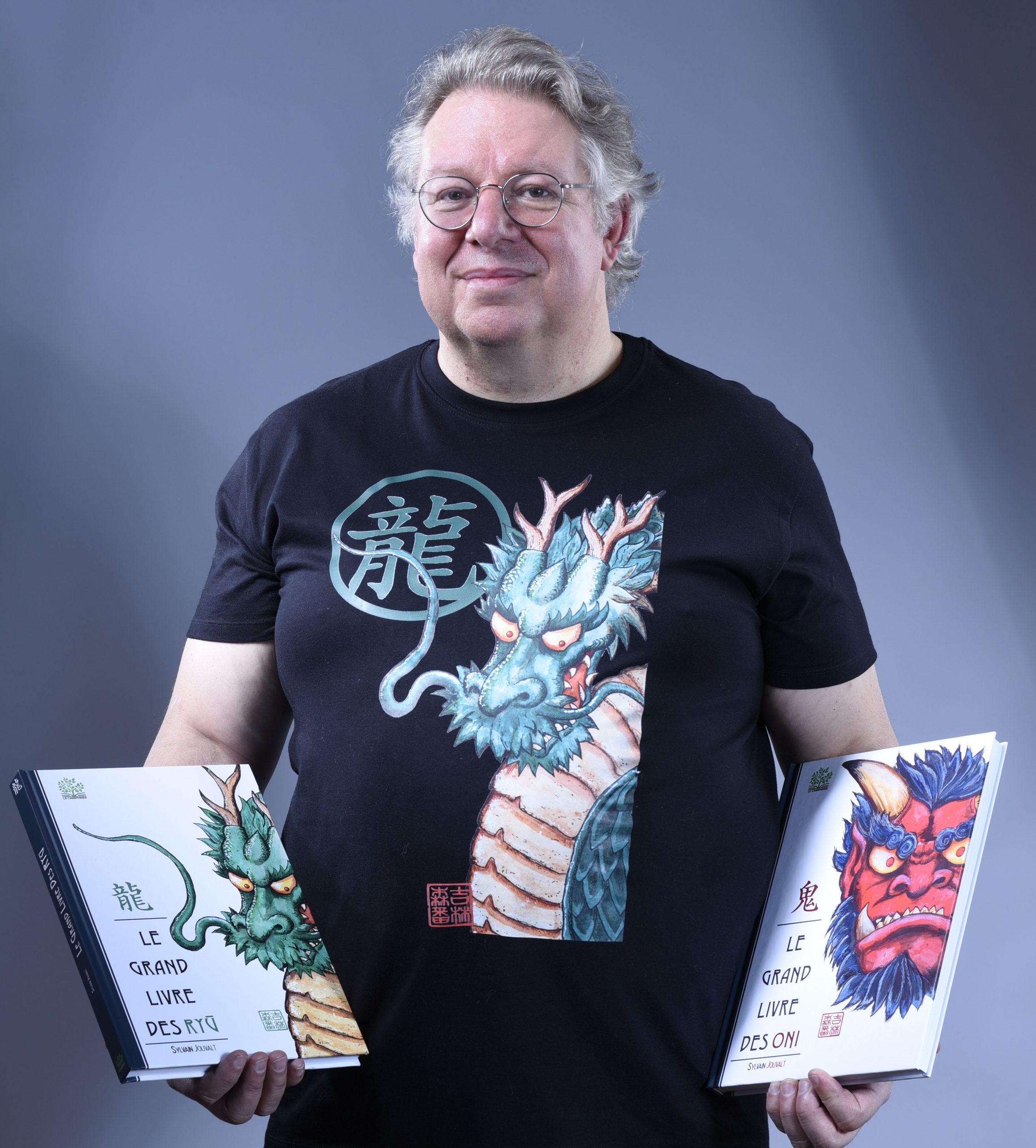
									<p>Avez-vous déjà entendu parler de cette tradition des nuits d’été durant lesquelles les Japonais se racontent des histoires de <em>yōkai</em> -des <em>KAIDAN</em>– dans le but de frissonner de peur ?</p><p>Auteur et illustrateur résidant à Strasbourg, je réalise des œuvres axées sur la culture traditionnelle et le folklore japonais, en particulier sur les <em>yōkai</em> et la mythologie japonaise, « Le Grand Livre des <em>oni</em> 鬼 » (2022) et « Le Grand Livre des<em> ryû</em> 龍 » (2025).</p><p>Je vous propose une rencontre en ligne entre la France et le Japon, animée par HIROE, une Japonaise bilingue. Le thème de ce premier événement est : les<em> oni</em> . Et le prochain portera sur les dragons. Je dessinerai un <em>oni</em> en direct, sous vos yeux. Puis, chaque participant disposera de trois minutes pour échanger avec moi : choisissez un dessin d’un <em>oni</em>, et expliquez pourquoi il vous a plu, ou alors montrez un dessin que vous aurez réalisé vous-même.</p>								</div>
				</div>
		<div class="elementor-element elementor-element-7146a66 e-con e-atomic-element e-grid-base e-7146a66-ebb6689 " data-id="7146a66" data-element_type="e-grid" data-e-type="e-grid" data-interaction-id="7146a66">
    <div class="elementor-element elementor-element-4ef3d27 e-flex e-con-boxed jltma-glass-effect-no e-con e-parent e-lazyloaded" data-id="4ef3d27" data-element_type="container" data-e-type="container">
					<div class="e-con-inner">
				<div class="elementor-element elementor-element-5b3a336 elementor-view-default jltma-glass-effect-no elementor-widget elementor-widget-icon" data-id="5b3a336" data-element_type="widget" data-e-type="widget" data-widget_type="icon.default">
				<div class="elementor-widget-container">
							<div class="elementor-icon-wrapper">
			<div class="elementor-icon">
			<svg aria-hidden="true" class="e-font-icon-svg e-fas-calendar-alt" viewBox="0 0 448 512" xmlns="http://www.w3.org/2000/svg"><path d="M0 464c0 26.5 21.5 48 48 48h352c26.5 0 48-21.5 48-48V192H0v272zm320-196c0-6.6 5.4-12 12-12h40c6.6 0 12 5.4 12 12v40c0 6.6-5.4 12-12 12h-40c-6.6 0-12-5.4-12-12v-40zm0 128c0-6.6 5.4-12 12-12h40c6.6 0 12 5.4 12 12v40c0 6.6-5.4 12-12 12h-40c-6.6 0-12-5.4-12-12v-40zM192 268c0-6.6 5.4-12 12-12h40c6.6 0 12 5.4 12 12v40c0 6.6-5.4 12-12 12h-40c-6.6 0-12-5.4-12-12v-40zm0 128c0-6.6 5.4-12 12-12h40c6.6 0 12 5.4 12 12v40c0 6.6-5.4 12-12 12h-40c-6.6 0-12-5.4-12-12v-40zM64 268c0-6.6 5.4-12 12-12h40c6.6 0 12 5.4 12 12v40c0 6.6-5.4 12-12 12H76c-6.6 0-12-5.4-12-12v-40zm0 128c0-6.6 5.4-12 12-12h40c6.6 0 12 5.4 12 12v40c0 6.6-5.4 12-12 12H76c-6.6 0-12-5.4-12-12v-40zM400 64h-48V16c0-8.8-7.2-16-16-16h-32c-8.8 0-16 7.2-16 16v48H160V16c0-8.8-7.2-16-16-16h-32c-8.8 0-16 7.2-16 16v48H48C21.5 64 0 85.5 0 112v48h448v-48c0-26.5-21.5-48-48-48z"></path></svg>			</div>
		</div>
						</div>
				</div>
					<h2 data-interaction-id="79381db" class="e-heading-base">Quand ?</h2>
				<div class="elementor-element elementor-element-fe44694 elementor-icon-list--layout-traditional elementor-list-item-link-full_width jltma-glass-effect-no elementor-widget elementor-widget-icon-list" data-id="fe44694" data-element_type="widget" data-e-type="widget" data-widget_type="icon-list.default">
				<div class="elementor-widget-container">
							<ul class="elementor-icon-list-items">
							<li class="elementor-icon-list-item">
											<span class="elementor-icon-list-icon">
							<i aria-hidden="true" class="jltma-material-icon jltma-material-icon-calendar_today"></i>						</span>
										<span class="elementor-icon-list-text">Samedi 15 août</span>
									</li>
								<li class="elementor-icon-list-item">
											<span class="elementor-icon-list-icon">
							<i aria-hidden="true" class="jltma-material-icon jltma-material-icon-watch_later"></i>						</span>
										<span class="elementor-icon-list-text">Heure française : 10h00</span>
									</li>
								<li class="elementor-icon-list-item">
											<span class="elementor-icon-list-icon">
							<i aria-hidden="true" class="jltma-material-icon jltma-material-icon-watch_later"></i>						</span>
										<span class="elementor-icon-list-text">Heure japonaise : 17h00</span>
									</li>
						</ul>
						</div>
				</div>
					</div>
				</div>
		<div class="elementor-element elementor-element-0345dc4 e-flex e-con-boxed jltma-glass-effect-no e-con e-parent e-lazyloaded" data-id="0345dc4" data-element_type="container" data-e-type="container">
					<div class="e-con-inner">
				<div class="elementor-element elementor-element-4423c60 elementor-view-default jltma-glass-effect-no elementor-widget elementor-widget-icon" data-id="4423c60" data-element_type="widget" data-e-type="widget" data-widget_type="icon.default">
				<div class="elementor-widget-container">
							<div class="elementor-icon-wrapper">
			<div class="elementor-icon">
			<i aria-hidden="true" class="jltma-material-icon jltma-material-icon-where_to_vote"></i>			</div>
		</div>
						</div>
				</div>
					<h2 data-interaction-id="21ccce0" class="e-heading-base">Où ?</h2>
					<p class="e-c5dfff4-b866d15 e-paragraph-base" data-interaction-id="c5dfff4">En visio, par ZOOM</p>
					</div>
				</div>
		<div class="elementor-element elementor-element-06ea79c e-flex e-con-boxed jltma-glass-effect-no e-con e-parent e-lazyloaded" data-id="06ea79c" data-element_type="container" data-e-type="container">
					<div class="e-con-inner">
				<div class="elementor-element elementor-element-8e50783 elementor-view-default jltma-glass-effect-no elementor-widget elementor-widget-icon" data-id="8e50783" data-element_type="widget" data-e-type="widget" data-widget_type="icon.default">
				<div class="elementor-widget-container">
							<div class="elementor-icon-wrapper">
			<div class="elementor-icon">
			<svg aria-hidden="true" class="e-font-icon-svg e-fas-money-bill-wave" viewBox="0 0 640 512" xmlns="http://www.w3.org/2000/svg"><path d="M621.16 54.46C582.37 38.19 543.55 32 504.75 32c-123.17-.01-246.33 62.34-369.5 62.34-30.89 0-61.76-3.92-92.65-13.72-3.47-1.1-6.95-1.62-10.35-1.62C15.04 79 0 92.32 0 110.81v317.26c0 12.63 7.23 24.6 18.84 29.46C57.63 473.81 96.45 480 135.25 480c123.17 0 246.34-62.35 369.51-62.35 30.89 0 61.76 3.92 92.65 13.72 3.47 1.1 6.95 1.62 10.35 1.62 17.21 0 32.25-13.32 32.25-31.81V83.93c-.01-12.64-7.24-24.6-18.85-29.47zM48 132.22c20.12 5.04 41.12 7.57 62.72 8.93C104.84 170.54 79 192.69 48 192.69v-60.47zm0 285v-47.78c34.37 0 62.18 27.27 63.71 61.4-22.53-1.81-43.59-6.31-63.71-13.62zM320 352c-44.19 0-80-42.99-80-96 0-53.02 35.82-96 80-96s80 42.98 80 96c0 53.03-35.83 96-80 96zm272 27.78c-17.52-4.39-35.71-6.85-54.32-8.44 5.87-26.08 27.5-45.88 54.32-49.28v57.72zm0-236.11c-30.89-3.91-54.86-29.7-55.81-61.55 19.54 2.17 38.09 6.23 55.81 12.66v48.89z"></path></svg>			</div>
		</div>
						</div>
				</div>
					<h2 data-interaction-id="a9bf9f1" class="e-heading-base">Tarif</h2>
					<p class="e-35e69f0-3af8024 e-paragraph-base" data-interaction-id="35e69f0">Tarif libre, sur le principe du "nagesen" (pourboire), à partir de 3€ / 500 ¥</p>
					</div>
				</div>

</div>
		<div class="elementor-element elementor-element-6f2e4921 elementor-align-right jltma-glass-effect-no elementor-widget elementor-widget-button" data-id="6f2e4921" data-element_type="widget" data-e-type="widget" data-widget_type="button.default">
				<div class="elementor-widget-container">
									<div class="elementor-button-wrapper">
					<a class="elementor-button elementor-button-link elementor-size-sm" href="https://fb.me/e/5XQ3Y6kuA">
						<span class="elementor-button-content-wrapper">
						<span class="elementor-button-icon">
				<svg xmlns:inkscape="http://www.inkscape.org/namespaces/inkscape" xmlns:sodipodi="http://sodipodi.sourceforge.net/DTD/sodipodi-0.dtd" xmlns:xlink="http://www.w3.org/1999/xlink" xmlns="http://www.w3.org/2000/svg" xmlns:svg="http://www.w3.org/2000/svg" width="190.15424mm" height="169.08258mm" viewBox="0 0 190.15423 169.08258" id="svg1" xml:space="preserve" inkscape:version="1.3.2 (091e20e, 2023-11-25)" sodipodi:docname="OniB2.svg"><defs id="defs1">
Demande de cours
Demande d'illustration
Demande d'animation
Demande de conférence
Événements 2026
8 février 2026 : Printemps Asiatique – Hoenheim (67)
28 février & 1er mars 2026 : Spinatorii – Epinal (88)
8 mars 2026 : Salon du Livre de la Krutenau / Strasbourg (67)
19 avril 2026 : Marché de créateurs de Sarrebourg / Sarrebourg (57)
8 mai 2026 : Duppi Games – Duppigheim (67)
9 & 10 mai 2026 : Festival du Jeu de Rôles – Kaysersberg
24 mai 2026 : Mang’Art – Wingen sur Moder (67)
26 & 7 juin 2026 : La Japan 2026 – Strasbourg (67)
13 & 14 juin 2026 : Festival 4H – Sarrebourg (57)
Du 7 au 19 juillet 2026 : Festival Full Moon Gome Tea – Strasbourg (67)
19 et 20 septembre 2026 : Salon du Livre – Vendenheim (67)
26 & 27 septembre 2026 : Festival des Sorcières – Bouxwiller (67)